
Palatal Expander
Overview
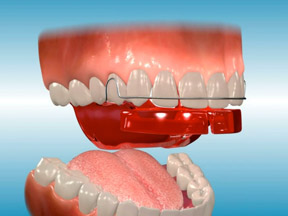
Bionator Appliance is an Orthodontic functional appliance t
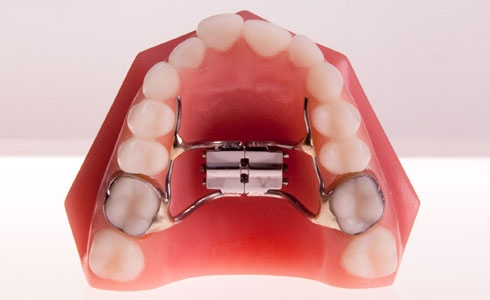
At Rehan Dental Surgery, the Palatal Expander is an orthodontic device designed to gently widen the upper jaw (maxilla) to improve the alignment between the upper and lower teeth. This treatment is especially helpful for children and adolescents, as their bones are still developing and respond more effectively to expansion.
By gradually applying pressure to the upper molars, the expander increases the width of the dental arch, creating more space for teeth to erupt properly and reducing problems such as crowding or crossbites. As a result, patients achieve better bite balance, improved function, and enhanced facial symmetry.
In addition to upper jaw expansion, similar appliances can also be used to achieve mandibular (lower jaw) expansion when needed. This approach helps create harmony between the upper and lower jaws, ensuring that teeth fit together in a healthy and stable way.
at was used to correct different malocclusions in orthodontics. The appliance was developed by Wilhelm Balters and it was designed to be a daytime appliance and less bulky compared to the Activator appliance. The idea behind developing this appliance was to increase patient’s comfort and facilitate daytime wear to increase functional use of appliance. Thus the appliance could be used both night and day time.
Palatal Expander at Rehan Dental Surgery
The expansion therapy should be started in patients either before or during their peak growth spurt. To obtain maximal skeletal changes, the therapy is typically initiated at a very early age.
Palatal Expansion therapy performed after the peak growth spurt will lead to more dental changes than skeletal which leads to tipping of buccal teeth.
This is a common orthodontic procedure. Although the use of an expander is most common in children (8%-18%), it can be, and has been, successfully used in adults too, although the effects of palatal expansion are slightly more uncomfortable in the adult patient. The amount of correction and the age of the patient can lengthen time of desired expansion to many months. A patient who would rather not wait several months for the end result by a palatal expander may be able to opt for a surgical separation of the maxilla. Use of a palatal expander is most often followed by braces to then straighten the teeth.
It is believed that expansion therapy should be started in patients either before or during their peak growth spurt. To obtain maximal skeletal changes, the therapy is typically initiated at a very early age. Expansion therapy performed after the peak growth spurt will lead to more dental changes than skeletal which leads to tipping of buccal teeth. There are different types of expansion techniques that can be used in patients such as rapid maxillary expansion, slow maxillary expansion, implant-based maxillary expansion and SARPE.
Testimonial
What They Say